Resources for Families to Help Children Feel, Learn & Thrive

Parenting comes with big questions, everyday challenges and opportunities to grow together. WCTE PBS connects parents and caregivers with resources to help children understand their feelings, build coping skills and appreciate the different ways people experience the world. Explore these videos, programs and learning tools to start conversations and support your child.
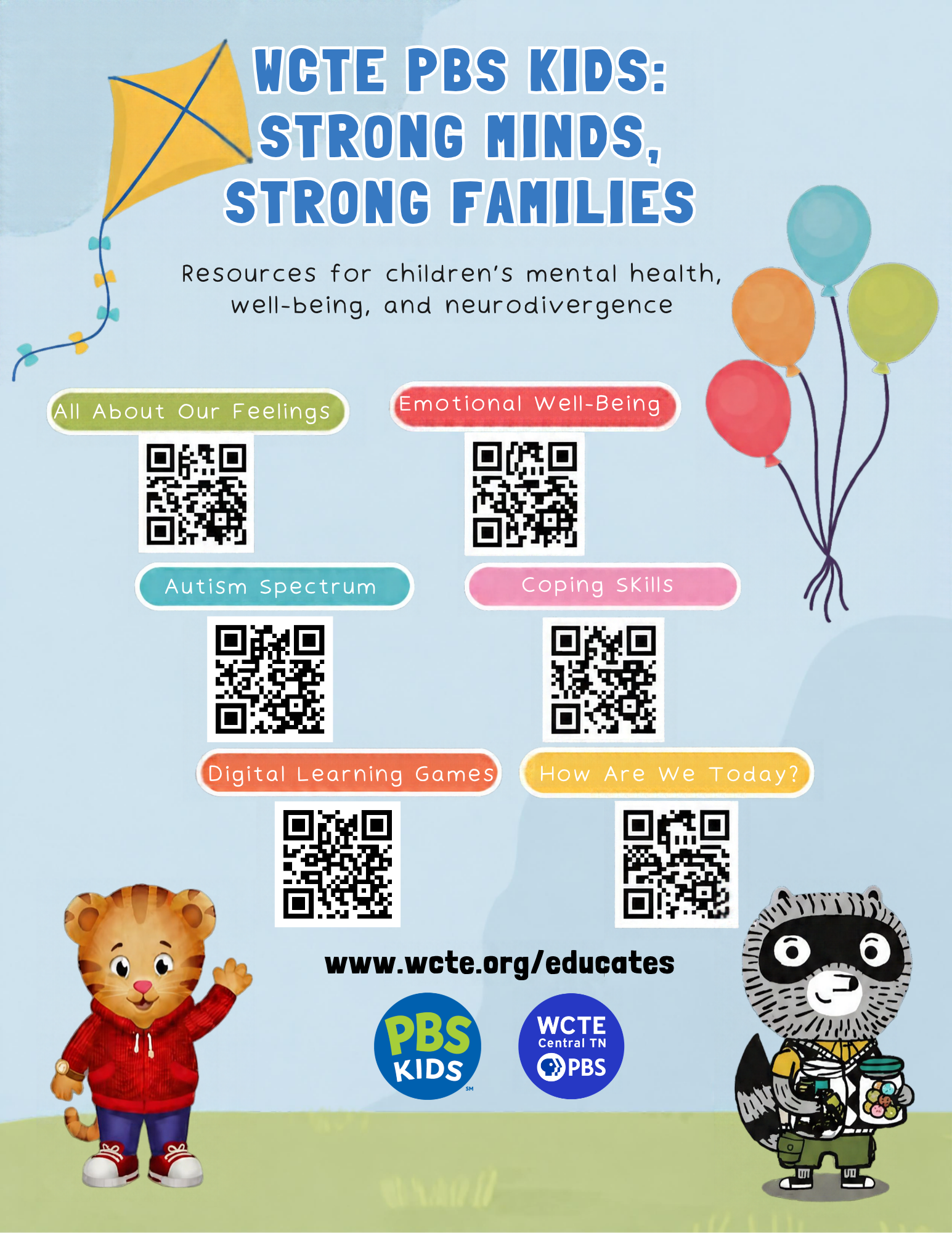
- Addressing Feelings can help caretakers introduce difficult emotions in a familiar, child-friendly format. Videos from different shows give caregivers multiple ways to discuss feelings such as anger, sadness, fear, frustration, or anxiety and help children recognize and communicate what they are experiencing.
- Emotional Well-Being provides caregivers with Sesame Street content specifically focused on emotional wellness. This can help adults start conversations about mental health, teach emotional vocabulary, and model healthy ways of expressing and managing emotions. Because the material is designed for children, caregivers can watch alongside them and reinforce the skills afterward.
- How Are We Today? can be particularly useful for caretakers of children experiencing mental health disorders. By addressing different disorders and ways of coping, the show can help caregivers better understand what a child may be experiencing and provide age-appropriate language for discussing mental health without stigma.
- Healthy Minds, Thriving Kids gives caregivers practical coping strategies that can be incorporated into everyday routines. These skills can be practiced together, allowing the caregiver to model strategies and help the child determine which approaches work best for them.
- Cyberchase games: Five specific games (Railway Hero, Echo Explorers, Duck Dash, Cyber Fashion Challenge, and Cyber Sound Quest) on PBS KIDS for Parents are engineered to be accessible for children with varying fine motor, auditory, or visual abilities.
- Supporting Children on the Autism Spectrum - Autism often presents itself in early childhood and is marked with challenges in communication, sensory processing, and social interactions. However, children with autism do not all show the same symptoms, and some symptoms may show themselves differently. Autistic children can also demonstrate unique strengths in areas such as pattern recognition and creative problem solving. Here are resources and PBS KIDS shows and characters to help children on the autism spectrum thrive. For caregivers, seeing neurodivergent characters represented in children's media can create opportunities to discuss differences, strengths, communication styles, sensory experiences, and acceptance. It can also help neurodivergent children see aspects of their own experiences reflected positively on screen.
Importantly, these webpages should be viewed as educational and supportive resources, not replacements for individualized professional evaluation or treatment. Their greatest value for caretakers is that they provide a shared, engaging way to help children understand themselves, develop coping skills, and feel represented and supported.


Together, these resources can serve as a supplement to professional care and everyday parenting strategies.
Caregivers can use them to:
- Learn alongside their children rather than simply telling them how they should feel or behave.
- Build emotional vocabulary so children can better communicate their needs.
- Practice coping strategies in a low-pressure environment before difficult situations arise.
- Normalize conversations about mental health and neurodivergence and reduce stigma.
- Find accessible activities that allow children with different abilities to participate.
- Use characters and stories as conversation starters, which can make difficult subjects easier for children to discuss.
- Encourage strengths and self-advocacy, rather than focusing solely on a child's disorder or challenges.